


Wendt Pottery Equipment Page 2019
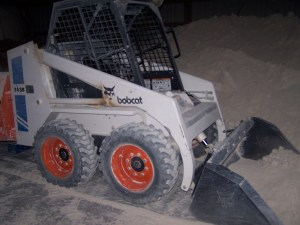

Above is the Bobcat loader I use to begin the processing of the Helmer Kaolin. Behind it is the dry storage area with over 300 tons of dry clay ore in stock The clay is loaded into the feed hopper above to meter it at a uniform rate into the hammer mill. Hopper capacity is 3000 lbs. I built this machine in 1991 and it has since processed over 17,000,000 lbs of Helmer Kaolin. The 9″ hammer mill blades slam into the clay at over 100 miles per hour to quickly reduce the ore to a fine powder. Built in 1975 to mill the clay, it has processed far more 17,000,000 lbs of clay. It has a continuous capacity of 1000 lbs per hour.
The roll mill does the first stage of crushing to 1/8″ which releases light weight organic contaminants such as roots. leaves, grass and light weight materials. The 3 HP dust collector for the roll mill is equipped with a special device called an air balancing damper. Its function is to compensate for dust loading the bag house so that the air velocity up the dust collector shaft is constant. This removes light weight material and dust only. Directly above the roll mill is a drum screen which removes the contaminants before the dust enters the dust collector. The dust collector fines are sold as Helmer Airfloat.
The coarser clay headed for the hammer mill goes first to a series of screens that remove any other foreign matter such as leaves, feathers, and grass missed by the roll mill dust collector. Stage one is 10 mesh which loops the oversize pieces larger than 10 mesh back into the grinder. All material smaller than 10 mesh then enters a 20 mesh screen and only feed 20 mesh and smaller is allowed into the hammer mill. As a result, the purity and quality of the clay has been greatly enhanced.
Fine ground clay leaves the hammer mill and enters a cyclone with a rotary valve at its base which allows the clay to enter the first fine screen (30 mesh). The second screen is 40 mesh. The resulting clay as fine as this process will allow.
From there, the clay is collected in bulk bags which allow grinding to proceed for hours at a time without too much attention. I use the timer on my cell phone to monitor the fullness of the bags as they approach maximum capacity.
In the future, I hope the demand will allow installation of a higher capacity system with air classification so that I can produce -200 mesh air float Helmer.
Here is a YouTube link that shows the dry bagging operation for those of you who want to mix your own clay bodies. Below is a photo of the 9″ hammer mill I still use to grind all the fine clay.

The bulk bag to the left is typical of the type I use. The 40 mesh screen strips out any remaining debris or coarse material which exits the screen end and falls into the collection bucket. The grind is so efficient that only a fer pounds per hour collect in the oversize bucket which is then periodically mixed with water and screened to 200 mesh to remove any coarse material before being dumped back into a pond in the indoor clay pile where is is allowed to air dry before grinding.
The screen removes mostly mica and occasionally a bit of black rock, most likely dropped from the truck tires during clay delivery to the drying pad here in Lewiston.
 helmerkaolin.com